
Populations affected and main drivers of undernutrition
Prolonged high/above emergency levels of wasting, stunting and micronutrient deficiencies among children under five years and PBWGs with levels of child (especially under 2s) wasting escalating seasonally during the hunger gap/rainy season. Main determinants for undernutrition include:
- Suboptimal infant and young child feeding practices (IYCF).
- Seasonal food insecurity with low availability of nutritious foods suitable for complementary feeding in local markets.
- Inadequate diet/food hygiene knowledge and practices.
- Seasonal increased levels of childhood infection especially diarrhoea and malaria.
- Cultural factors: use of traditional healers, removal of the uvula, giving the child water from the backwater, early marriages, etc.
- Insufficient autonomy/decision–making power for women.
- Suboptimal WASH practices: including food/water hygiene and widespread open defecation.
Response design
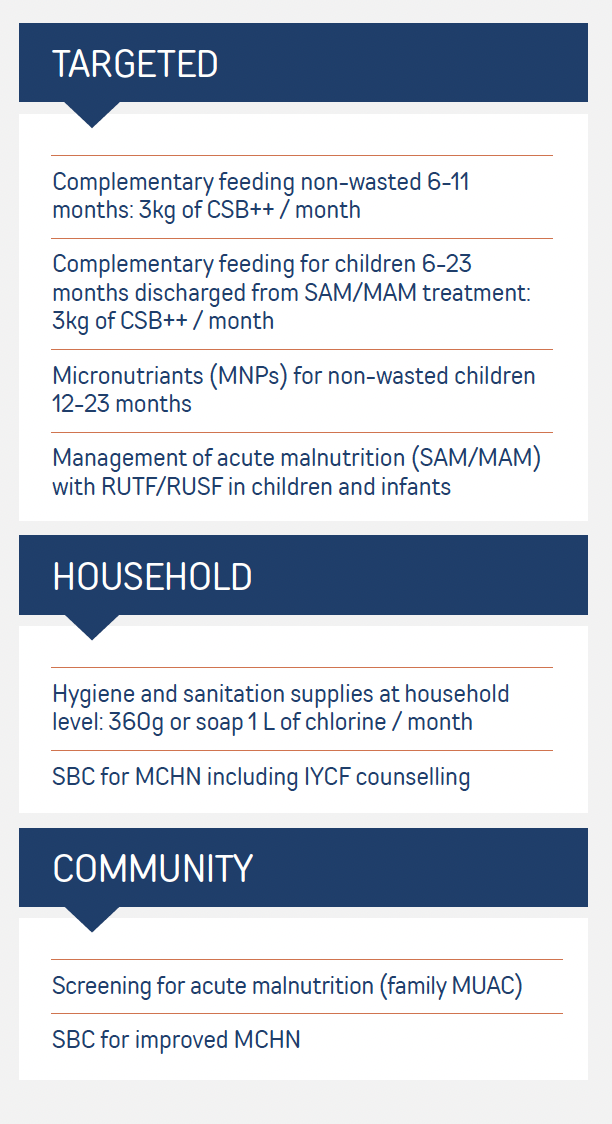
Any household with a pregnant woman or a child under the age of two was eligible for interventions delivered over a 9-month period.
Impacts on nutrition outcomes
- Improved maternal knowledge on nutrition, wasting screening, health, and use of chlorine to make water safe to drink.
- Increased daily consumption of CSB++ among 6–11 months.
- Improved practices for water treatment, as well as hygiene practices.
- Improvements in numbers of children presenting for vaccination.
The intervention did not improve IYCF practices nor was there any difference in wasting and morbidity prevalence in the intervention cohort at study baseline and endline measures. There was, however, a significant reduction in the incidence of severe wasting (ie, the number of new cases of severe wasting) by the end of intervention period compared to baseline.
Key gaps and challenges that may have affected impact
- Several important drivers of undernutrition identified in this context were not addressed by this response including:
- Access to nutritious foods suitable for complementary feeding of 11–23 month olds.
- Household food insecurity.
- Childhood infection esp. diarrhoea and malaria.
- Widespread open defecation.
- Context–specific activities to promote an enabling and empowering. environment for women/ households to improve IYCF practices.
- Coverage of the interventions was low until about five months into a nine month programme. The period during which reasonable coverage was achieved may have been too short to effect changes in nutrition status outcomes.
- Only a limited coverage of SBC was achieved. Achieving coverage and quality of home visits to all households using a volunteer model was challenging.
In conclusion, using community care groups to deliver at scale a preventive package including a food supplement, WASH inputs, the family–MUAC approach, screening, and SBC, all with varying modalities depending on the child's age and wasting status, was not sufficient to drastically reduce wasting on a very short time frame. However, significant improvements in health, WASH and feeding knowledge and practices and possible reduction of the occurrence of severe wasting in the intervention area by the end of the study, indicate that the approach may still have the potential to reduce wasting in the longer term, after adjustments are made to some implementation modalities and the package of services provided.